Tangled in the Ropes of Your Own Sin: What Proverbs 5:22–23 Teach us About Sin
Proverbs 5:22–23
A wicked man’s iniquities will trap him; he will become tangled in the ropes of his own sin. He will die because there is no discipline, and be lost because of his great stupidity.
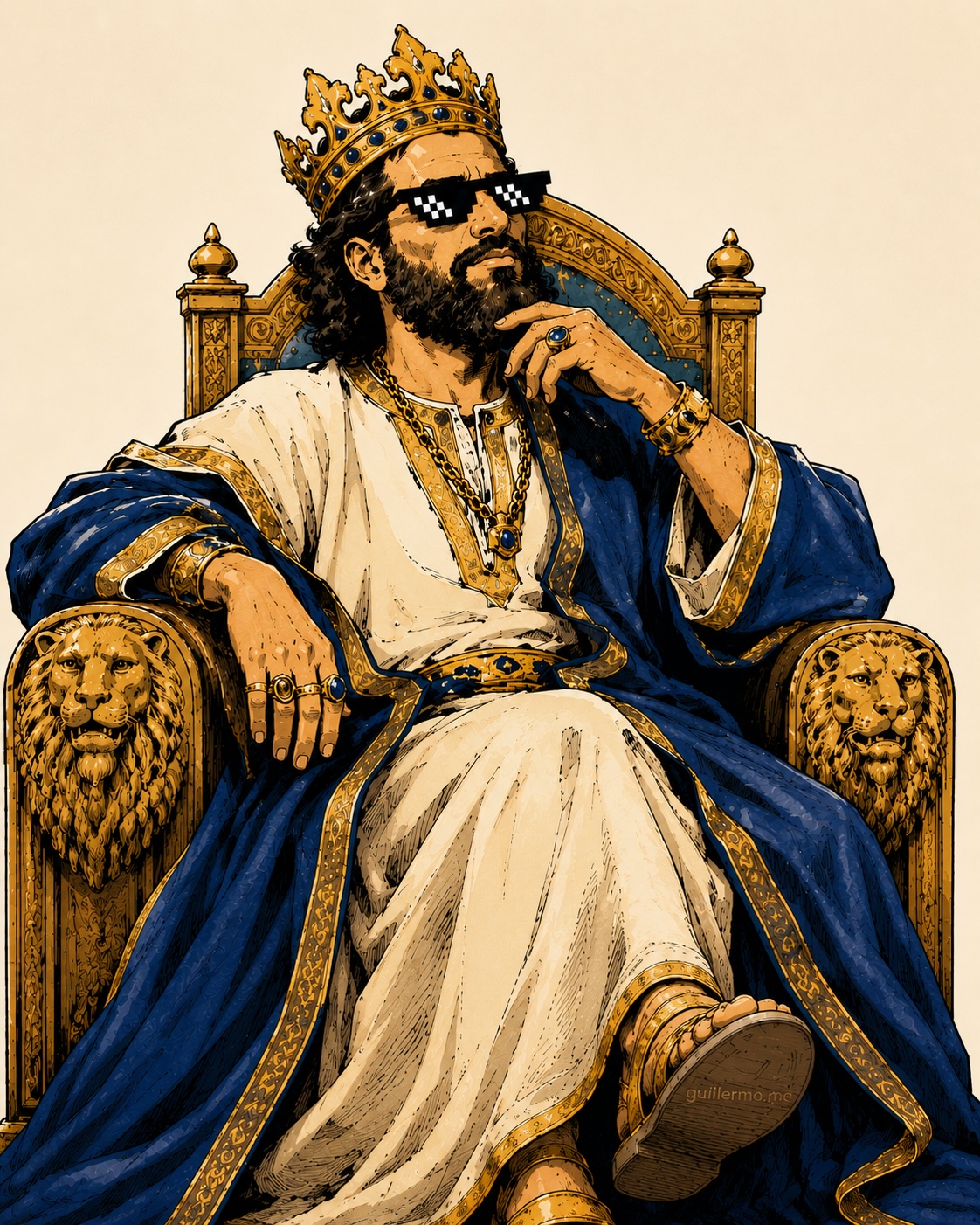
Savage Solomon • Five Meditations on Proverbs 5:22–23
Solomon was savage. Not because he lacked love, but because he refused to soften the truth. He called fools, fools. Pride, pride. Laziness, laziness. He did not flatter egos or make sin a small thing. He exposed reality as it is because wisdom begins when illusions end. Some Proverbs comfort us. Others confront us. We usually quote the first and ignore the second. This Savage Solomon series exists for the second.
Solomon does not soften this one. Proverbs 5:22–23 is probably not a passage we would put on a T-shirt—but maybe that is precisely why we need it.
Five Meditations on Proverbs 5:22–23
1. Sin changes the sinner.
Solomon begins with “a wicked man’s iniquities.” Notice that he does not merely describe wicked things; he describes a wicked man. Sin does not remain something outside of us that we occasionally do. Repeated sin begins forming the person doing it.
Psalm 36:1–2 describes this person as someone who has no fear of God before his eyes and flatters himself too much to recognize and hate his own sin. Psalm 10:4 goes even further: “There’s no accountability, since there’s no God.” That is where wickedness eventually takes us—not necessarily to atheism with our mouths, but to practical atheism with our lives. We begin living as though God does not see.
It is the same self-rule Solomon confronts when he warns about isolation, selfish desires, and the rejection of wisdom.
2. Sin sets its own trap.
Solomon says that a wicked man’s iniquities will “trap him.” The sinner eventually becomes trapped by the very thing he chose. You do not have to go looking for another enemy; your own sin is already working against you.
Jeremiah says something remarkably similar: “Your own evil will discipline you; your own apostasies will reprimand you” (Jeremiah 2:19). Sin carries consequences within itself. You thought you were controlling it. Eventually, it starts controlling you. The trap you are walking into may be the one you are building with your own hands.
3. You cannot run while you are tangled.
Picture yourself at the starting line of a race. Your legs are strong. Your lungs are ready. Your desire to win is real. But before the gun sounds, you bend down and tie each shoe to the opposite ankle. Then you sprint.
Foolish? Of course. Yet that is exactly what sin does. We tie ourselves up with the very things God warned us about, then blame the race when we keep falling. Read Solomon again: “He will become tangled in the ropes of his own sin.”
The author of Hebrews uses similar imagery when he tells us to lay aside “the sin that so easily ensnares us” so that we can “run with endurance the race that lies before us” (Hebrews 12:1). You cannot run freely while insisting on keeping the ropes.
Sin promises freedom and then ties your shoes together.
4. Sin is not playing with you.
Then Solomon gets even more direct: “He will die.” Psalm 34:21 says something similar: “Evil brings death to the wicked.” We tend to negotiate with sin because we underestimate what it wants.
We call it a habit, a struggle, a weakness, something we are “working on.” Solomon calls it something capable of killing you. Jesus said, “Everyone who commits sin is a slave of sin” (John 8:34). Sin is not interested in remaining a small, manageable part of your life. Do not play with something that wants to become your master.
5. Discipline cuts the ropes.
Here is the part I find fascinating: “He will die because there is no discipline, and be lost because of his great stupidity.” The opposite of this destruction is discipline.
Psalm 94:7–12 connects these ideas almost perfectly. The wicked say, “The LORD doesn’t see it. The God of Jacob doesn’t pay attention.” God’s response is direct: “Pay attention, you stupid people!” Can the One who made the ear not hear? Can the One who formed the eye not see?
But then the Psalm turns toward discipline: “LORD, how happy is anyone you discipline and teach from your law.” There is the alternative: discipline connected to God’s Word. That is discipleship. The fool keeps tying knots. The disciple allows God’s Word to expose them, correct him, and teach him another way.
Discipline Is Not Self-Salvation
Cutting the ropes is not a way to earn God’s grace. It is a response to grace. Scripture calls us to put sin to death “by the Spirit” (Romans 8:13), and God faithfully provides a way out when temptation comes (1 Corinthians 10:13).
You are not left alone with the knots you have tied. God is able to help those who are tempted, strengthen those who are weak, and lead His people into freedom.
Do Not Blame the Race
Proverbs 5:22–23 gives us a brutal picture of sin. We choose it, and then it traps us. What once seemed pleasurable becomes a rope. What seemed like freedom becomes slavery. What we thought we controlled eventually begins controlling us.
And then we wonder why we cannot run.
Solomon’s warning is not cruel; it is mercy. God exposes the ropes because He does not want us living tangled in them.
Stop blaming the race for the ropes you refuse to cut.
Where do you see sin promising freedom while quietly tying a rope? If something in this reflection stayed with you, I would be glad to hear about it. You are welcome to leave a comment below.
If you would like to receive future reflections about knowing God and living a meaningful life, you can subscribe to my newsletter. I would be grateful to continue the journey with you.